
Run The Experiment.
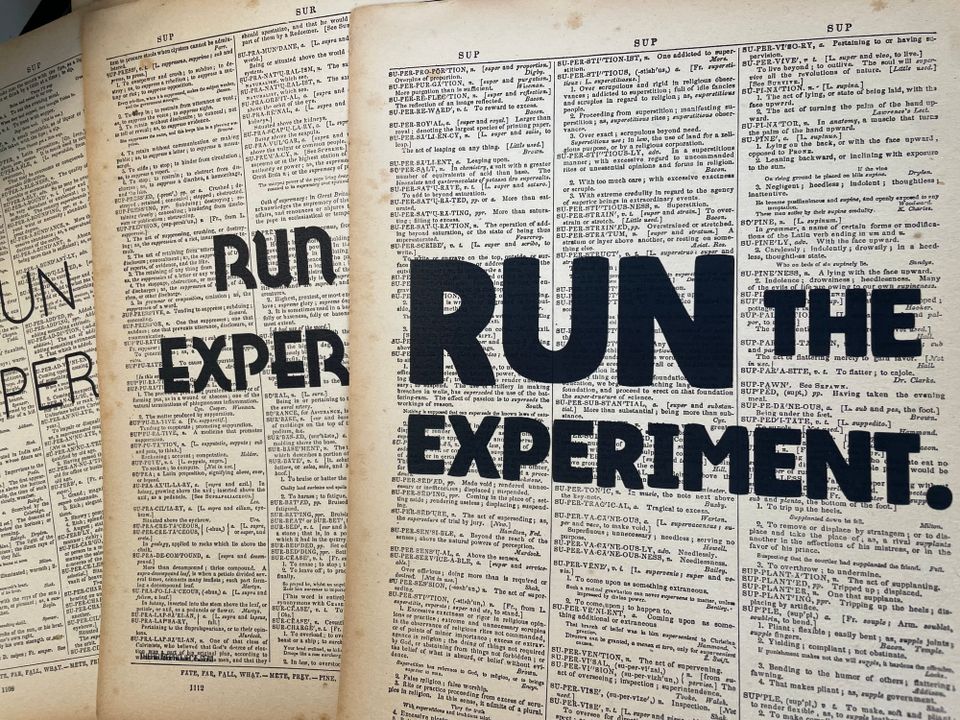
What if, before triggering new manufacture, we found out how far the capacity we already have could take us?
This is your field kit for finding out.
Try It.
What if new manufacture is lava?
You don't need to overhaul your life. You don't need to become an expert in reuse. And you don't need to decide in advance what you're going to test.
The next time you catch yourself thinking: “I need…” or “I want…”
Run the experiment.
Don't assume you don't have alternatives to new manufacture. Test the limits of existing capacity. Bump up against the edge.
Ask: What do I already have?
Does what I need already exist?
What else could work?
Use what you've got. Repair it. Adapt it. Borrow it. Find one that's already out there. Or discover a solution you hadn't considered. Notice what gets in the way. Notice what makes the alternate path easier. That's part of the experiment, too.
And if you reach the edge? That's data. If new manufacture really is the best solution, use it.
You fell in the lava? No penance. No purity test. Get back on an island and keep playing.
Find It.
The stuff is already out there. The trick is finding it.
- Search for the object, not the shopping category. Model numbers, dimensions, materials, distinctive details.
- Try different language. Used, pre-owned, vintage, NOS/new old stock, deadstock, open box, replacement, discontinued.
- Search by image. Especially when you don't know what something is called—or exactly how another person described it.
- Search more than one market. Different objects congregate in different places.
- Don't click BUY immediately. Watch, favorite, save searches, compare, wait for offers.
- Expand your range of possible solutions by identifying what you're trying to solve with the purchase. The thing you initially imagined buying may not be the only—or even the best—solution.
→ Find it
Make It Visible.
Finding existing things only works when somebody makes them findable.
If you have useful things—or access to useful things—you can become part of the infrastructure. Sell them. Share them. Identify them. Photograph them. Describe them. Sort them. Repair them. Bundle them. Ship them.
Help existing capacity find the person who needs it. Reuse needs more than shoppers. It needs people who know how to move things.
Show Me the Evidence.
Don't take our word for it. Follow the data.
Lifecycle impacts. Manufacturing. Transportation. Reuse. The assumptions and calculations behind the experiment.
→ Explore the evidence + sources
Take the Experiment with You.
Put the reminder where the decision happens.
Download a handy reminder and put it somewhere you'll encounter it when you're about to buy something. Print it. Tape it up. Make a magnet. Stick it in your wallet. Use it as your phone background.
And please don't buy anything to do this. Print it on the back of a bill, junk mail, office scrap, or something headed for recycling. Use materials you've already got.
What Did You Discover?
You just generated data. What worked? What didn't? Where did you bump up against the edge? What was surprisingly easy? What made using existing capacity harder than it needed to be?