Better Options Become Possible Incrementally
A couple of days ago, I shared some of the trauma/brain context behind my long absence from public-facing work, and what I've learned about rebuilding after everything falls apart.
Sometimes, we need to wait for viable conditions before we can move forward, and I'm not sure I've ever felt more validated than I do today for having had the foresight - and the grit - to make each small decision - about my future, my child, about Junket - with intent and integrity while navigating insane complications. If I'm going to credit my early religious upbringing with anything, it is, apparently, quite a capacity for deferred gratification.
That doesn't mean I haven't been tinkering, testing, tentatively taking action — that was how I chose to explore what might be possible, and gathered useful information, while waiting for Go Time.
Last night's response to the direction this country has been headed got me thinking about what might now be possible for all of us.
We — collectively — proved ourselves capable of making small, incremental decisions (small pen marks on paper ballots, voting early, inviting friends) in ways common enough to have fundamentally shifted not only the balance of power, but also the Overton Window of what becomes possible next.
YEARS of organizing preceded this — but at the end of the day, this extraordinary outcome was the cumulative result of millions of tiny scribbled-in ovals. You did that. We did that.
For all the storms I've weathered over the last eight years, I've found peace in making good, incremental choices — trusting that their cumulative impact would matter tremendously when the time came. Kinda like heaven, but, you know, before kicking the bucket.
Write the thank-you note. Ship the order. Include a little bit extra. Respond kindly to buyers clearly going through it. Do my best to continue the work as it is, because an Overton Window will eventually come.
While sharing difficult context is an important part of this story, it's more important to me that you know it as the broken mess that created the conditions for the emergence of stronger, better work.
For that, I'm exceedingly grateful.
I remember being all too aware back in 2016 that if Junket were going to go ZOOM again, I'd need at least a few years to recover before that happened.
Didn't think the break I'd known I'd need would be quite as long or as complicated, but I knew what it felt like to operate from flow state, and that its return would be my compass for whatever came next. First, though, I'd have to nurture the conditions for it to flourish.
While I've been mostly absent online for the last several years, I began showing up in analog community again — this time in the Whittier neighborhood — in the spring of 2024, one year after escaping the crush of so much, and about six months after my body and brain had begun demonstrating some capacity for functioning in lockstep again.
I was anxious about putting a bunch of marketing energy into events subject to physical health and weather conditions, and didn't want to complicate any worst case scenarios with administrative complications, so I went light and late on digital promotion, and leaned heavily into directional signage, painted LPs, and bouncing ponies... and Whittier was there for it.
Last fall (one year ago today, in fact), that's where I — and the inventory — landed.
On January 2, I attended an Urban Design coffee chat in the neighborhood — to introduce myself, get to know who was doing systems work, and share that I was looking forward to becoming more involved after I'd gotten my apartment — and business — settled and operational in this new community (hint: when you're car free by design, you know that even postal logistics involve strategic adaptation).
I was still exploring the dimensions of my returning sense of psychological safety three weeks later when a Signal chat sent me whistling my way out onto the street in slippers and PJs... just in time to hear ten shots, followed by screams...followed by everything else.
In the months that followed, I'd come to understand how profoundly different Whittier's economic circumstances are from those I experienced while nurturing Junket in wealthier, whiter Longfellow.
I am quite literally a community elder. I joke that I'm everybody's mom. And, consistent with the lived experience of so many Gen Zs & Zillennials, many of my neighbors here are scraping by, and clawing through. The mutual aid energy is fierce as fuck — but it's hard to pay everybody's rent with the same circulating $20 – even with a Really Really Free Market.
(Twin Cities Really Really Free Market is, of course, amazing, and you should really, really stop by this weekend for their last event of the year, if only to get a peek at the kind of social infrastructure that would do well to be adequately funded rather than run on vibes and volunteers).
The commitment to mutual aid is so strong here that showing up as both a neighbor and an organizer advocating for economic development was met with skepticism I hadn't anticipated. It's good that people are wary.
I'm secure in what I bring to the equation, but navigating that skepticism without an established reputation was tricky. That depth of authentic connection had been my biggest loss in Longfellow.
After a year of encounters, experiments, learning, and paying curious attention, one thing has become increasingly clear: The solution here isn't retail – it's capacity building within the conditions of reality.
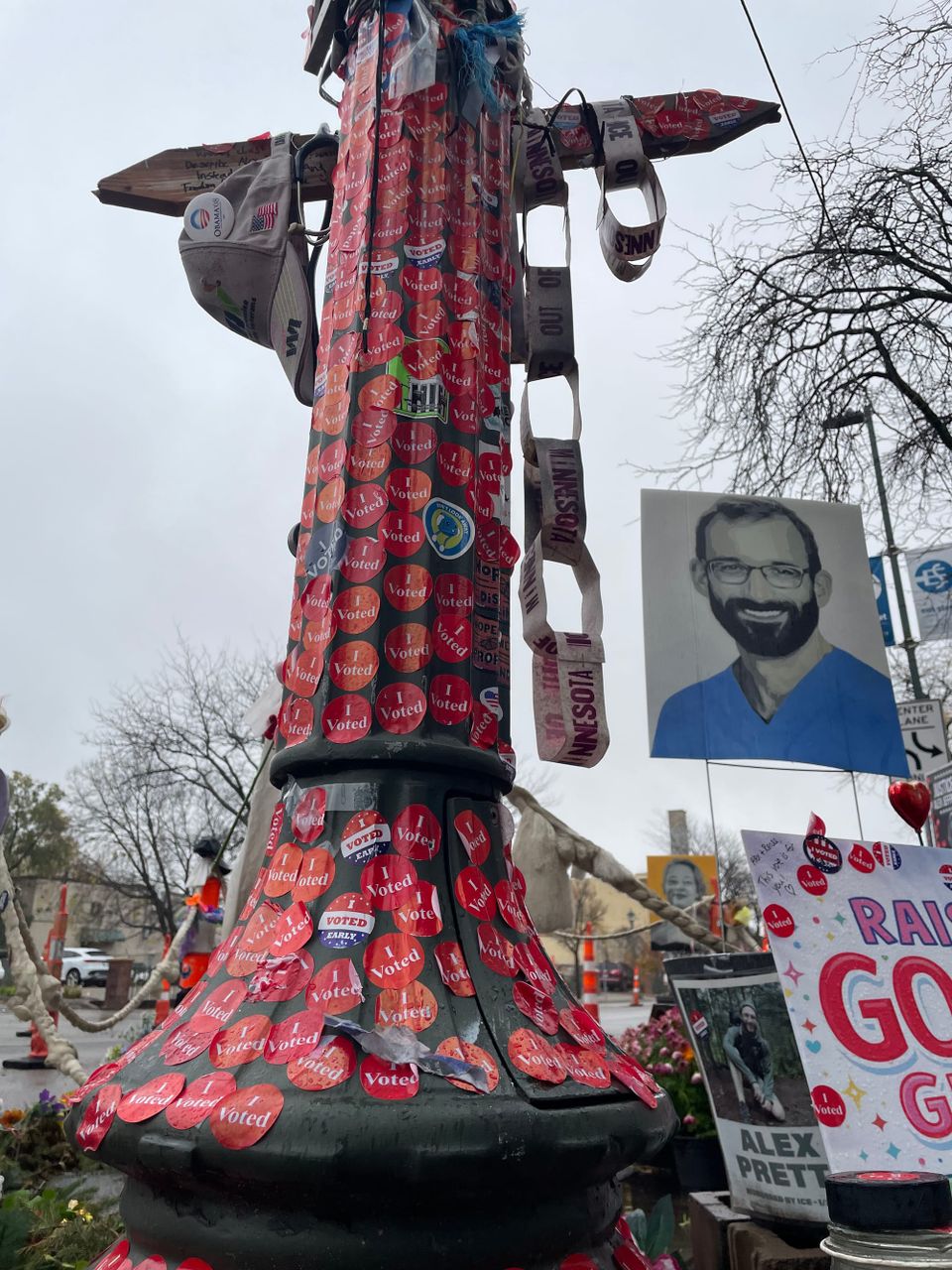
It seems only appropriate that this next phase begin in a tiny apartment, fully-stocked with the tended remainders of a prior experiment in regenerative community commerce, less than a block from a memorial freshly covered in 'I Voted' stickers.
Better options become possible incrementally.
We don't need to make every change today, but the choices we make now help determine what's possible tomorrow.
After last night, I'm feeling pretty good about what we might make possible together.
Member discussion